

On: Nostalgia-tecture
The Serpentine pavilion at 25

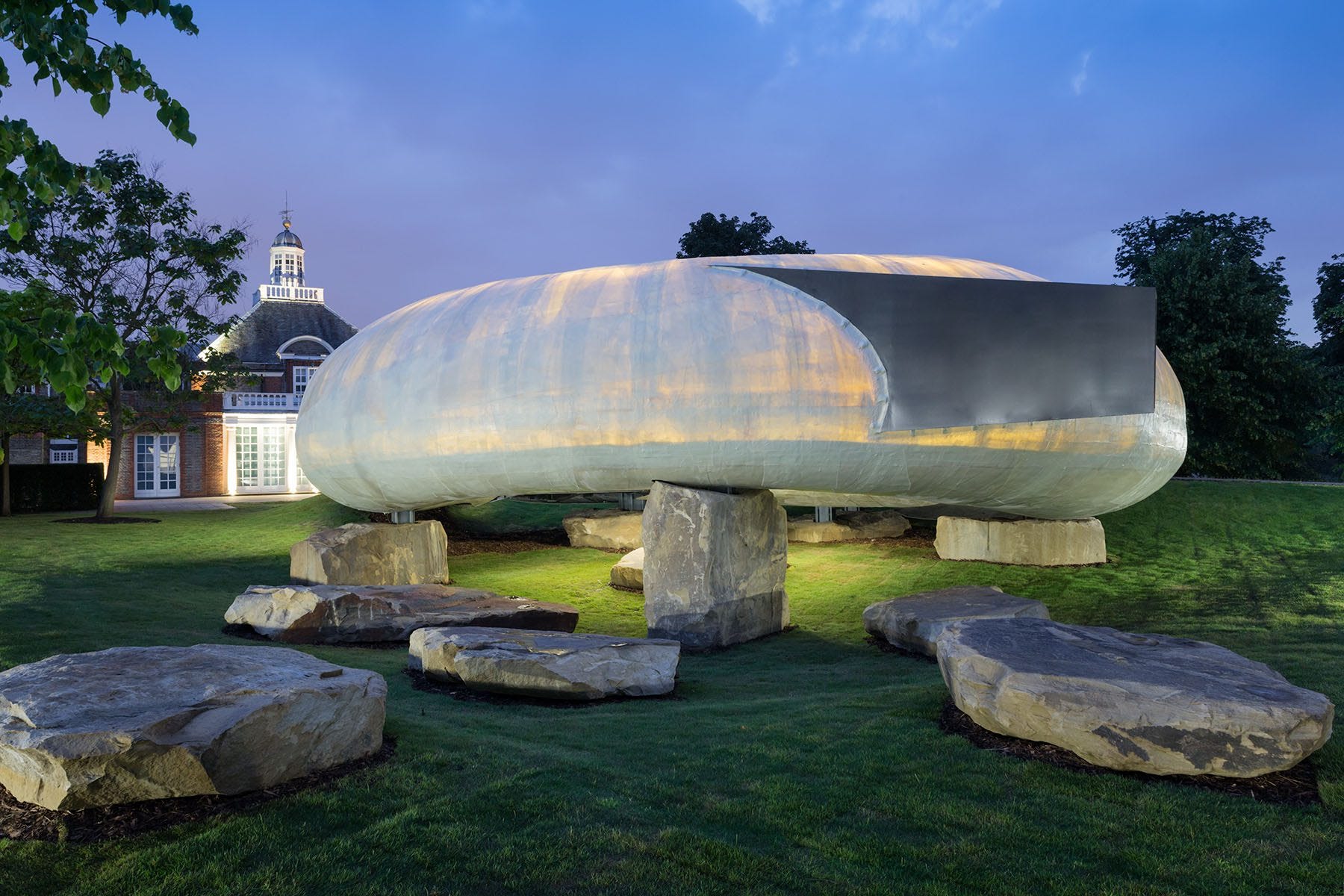
I knew I wanted to be an architect at the age of eleven, which I blame entirely on The Sims 2. At seventeen I was on a UCL architecture summer school, locked in, taking it very seriously you know.. doing the thing. We visited the Serpentine Pavilion that summer. Smiljan Radić, 2014, a green fibreglass shell balanced on a cluster of boulders, translucent and quite slitheen-esque. Sitting in Hyde Park as if it had landed there and it couldn’t quite phone home. I precociously thought I understood what architecture was yet standing there, I realised I had been dealing in Shards and Girkins, when I should have been dancing with the Serpentine.
Hello, welcome to On: Rotation, my monthly musings mag-rag, where I discuss whatever I’m thinking about that month on the rotating platter that is my little brain (sorry if that sounds like a threat). Bisous!
The Elizabethans classified nostalgia as a disease, which feels dramatic until you consider what it actually does to a discipline like architecture were not talking ipod’s here! Svetlana Boym argued that nostalgia isn’t really about a place at all, it’s a yearning for a different time, and in wanting that time back it quietly kills the present one. Architecture is particularly susceptible to this. We have spent the last decade fetishising brutalism, reviving postmodernism (guilty), re-releasing Corb like a greatest hits album literally nobody asked for. There is nothing wrong with any of that. But there is something genuinely exciting, and genuinely rare, about a programme that forces you to reckon with now rather than then. The Serpentine Pavilion has always been a present tense institution and we nearly forgot that was the whole point.
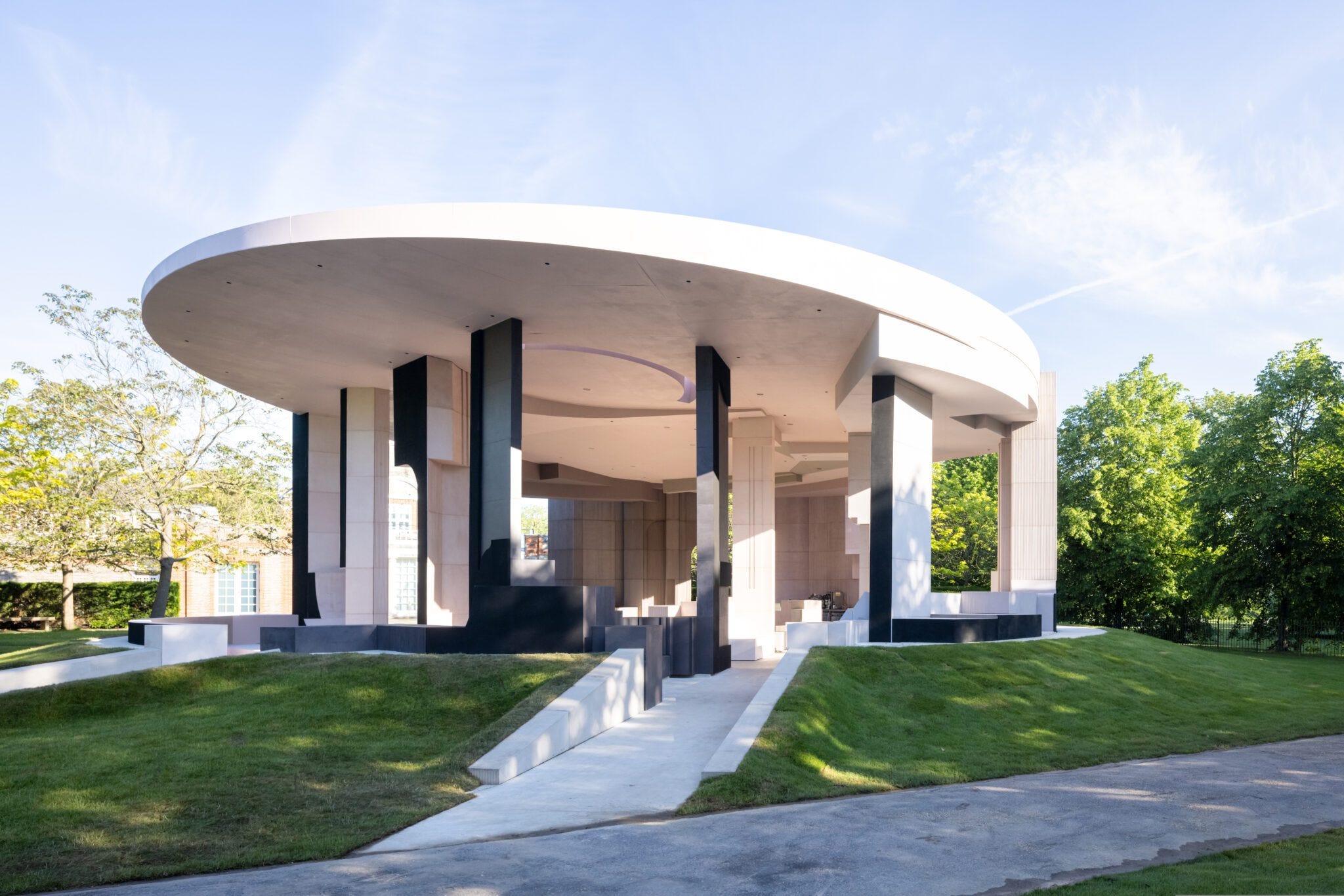
So few provocative installations or spaces have anything less than a £20 price tag these days, especially in London. Counterspace, Sumayya Vally’s Johannesburg based practice, built a pavilion in 2021 that drew on Black diasporic gathering spaces across London, community spaces in Brixton and Peckham and Hackney, and made an argument about whose public Hyde Park actually belongs to. Like all SerPav’s it was free to encounter, you could quite literally sit within the argument. The Serpentine is one of the most genuinely international architecture programmes running anywhere, and its audience is people walking their dogs or riding their bikes. If you wanted to design a programme specifically intended to make architecture feel like a less closed conversation, it would probably look a lot like the serpentine pavilion.
None of which means it’s beyond critique. Twenty-five years is a long time for any format to stay surprising, a certain familiarity has set in. When something becomes such a reliable fixture of the London summer calendar and hat something has been sponsored by Goldman Sachs for over a decade, the wildness that defined its early years becomes intrinsically harder to maintain. The programme has felt, in recent years, more like a cultural institution than a genuinely unpredictable one. It’s like a reality TV Show ru pauls drag race or love island, the more seasons there are the less authentic it becomes. Any public facing publicity led structure becomes an Ouroboros eating itself.
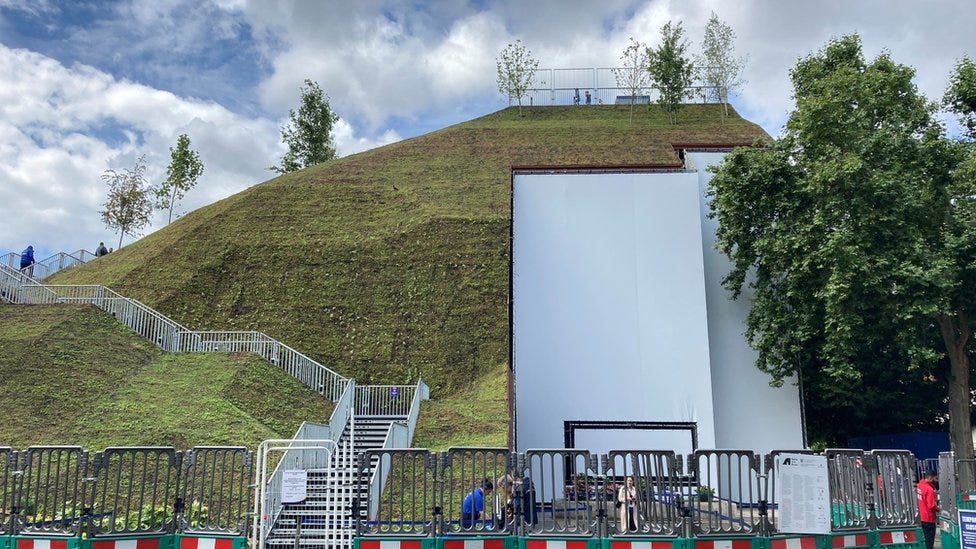
In 2004 the Serpentine said no to MVRDV’s proposal to build an artificial mountain over the gallery itself. Seventeen years later Westminster City Council said yes to essentially the same idea at Marble Arch. Its budget doubled and visitors called it a slag heap. So it seems the commission structure still has a pretty substantial integrity level in its curatorial judgment!
It is that curatorial judgment that makes the retrospective weight of the alumni list feel less like a burden and more like a proof of concept. We look back at Hadid, Gehry, Niemeyer and we see giants, names that have gone platinum. What we forget is that the programme commissioned most of them before they were any of those things. Hadid was making a name for herself steadily but the programme didn’t celebrate her reputation. It made a bet on her before the reputation existed.


Every architect who walks onto that lawn now carries the full weight of everything it has already witnessed, which is an almost unfair amount of context to design inside. But the original conditions, the uncertainty, the not yet knowing, those are still available. The only place they exist is in this year’s pavilion, in the present tense, before the verdict is in.
So here is this year’s bet. LANZA atelier, 2026, a serpentine.
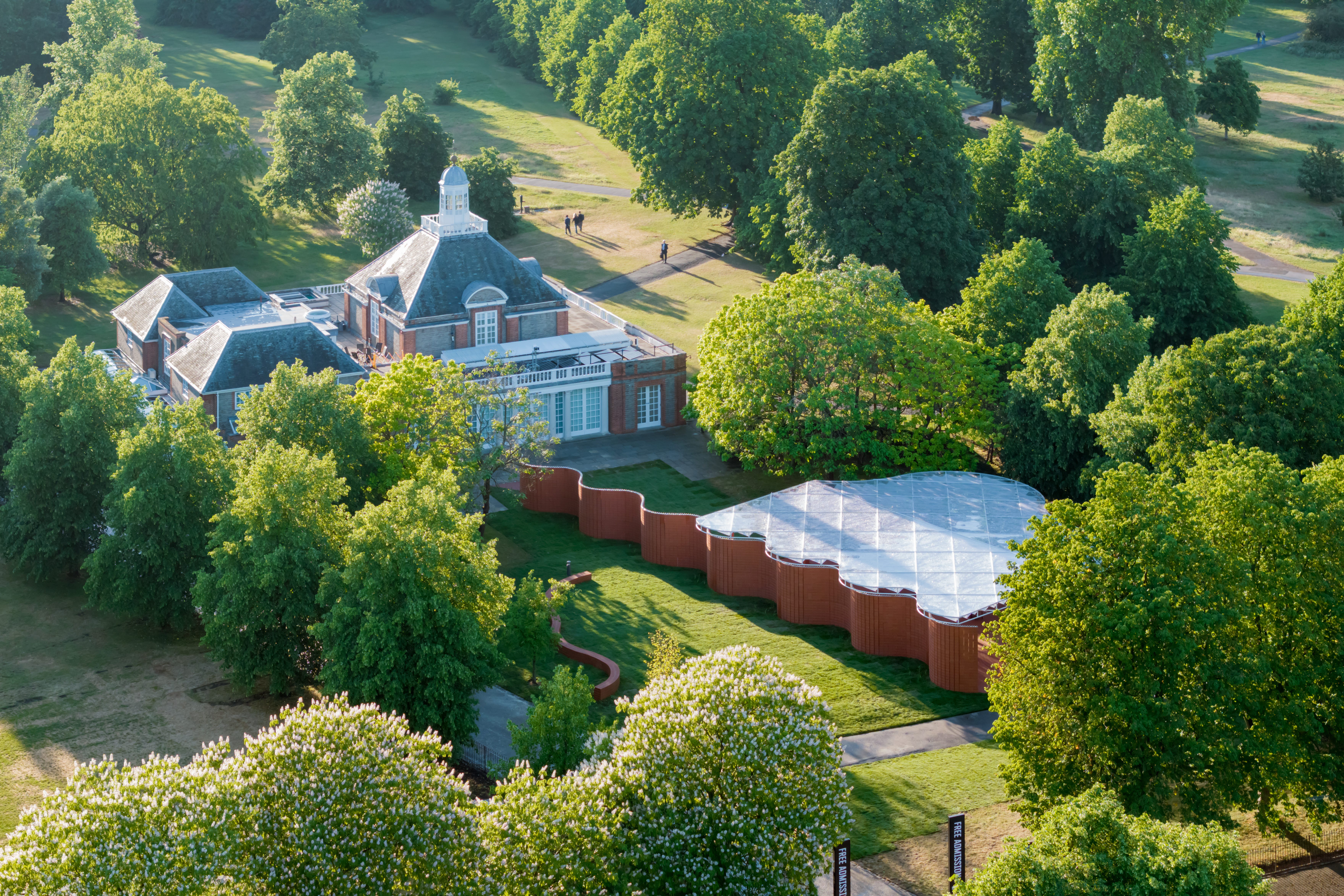
The concept is a crinkle-crankle wall, yes its actually called that! A wall that wiggles rather than running straight can be one brick thick and still hold itself upright. The undulation gives it structural integrity ergo… wobbly wins. It is an Ancient Egyptian technique filtered through English garden architecture. LANZA took it and built an entire pavilion around its logic. Walls like that are also called “A Serpentine” in the states so the serpentine is called… a serpentine. How fab. Two walls follow the contour of the lawn, slender brick columns between them and a translucent roof drops light through (when the sun decides to shine)
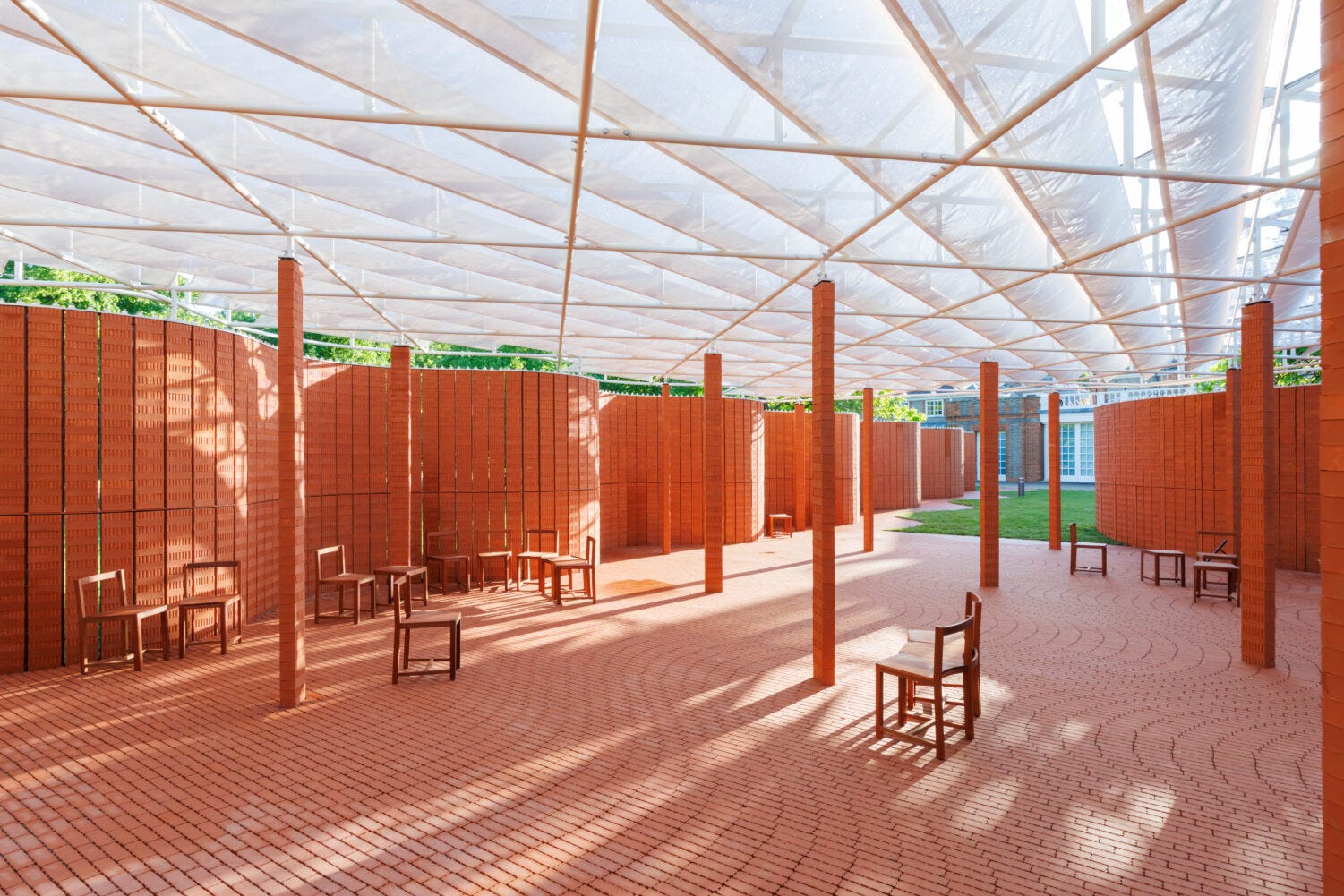
When you stand inside it you are obviously in a structure yet also still in the park. Its threshold is not necessarily defined. I’m reminded of the original shift the pavilion brought to my architectural scope in 2014. It doesn’t try to be the most dramatic thing you have ever seen rather the reason to stop moving for a moment. The contrast of a building material we see every day against the lush green of hyde park, Its a beautiful combination that earns its place amongst the trees.
The Elizabethans were right that nostalgia is a disease, but the prescription isn’t to forget the past. It’s to stop using it as the only measure of the present. We look back at the pavilion archive and feel something, and what we’re actually feeling is the loss of not yet knowing. The loss of the version of ourselves that stood in front of a shell on some boulders and had their understanding of an entire discipline rearranged. That feeling isn’t available in the archive. It is only available now, in this year’s commission, before history has decided what it means.
Who knows if LANZA Atelier will become names in lecture slides in fifteen years. That question belongs to the future. Right now they are two architects from Mexico City who built something provocative and materialistically captivating, and the patch of grass outside of a small gallery is giving you the same thing it gave me in 2014: a serious idea with no prior knowledge required, no legacy yet attached, no verdict yet in.
So go now before the results are in. make your own mind up!
‘a serpentine’ by LANZA atelier is open now until 26 October! Free entry!!!
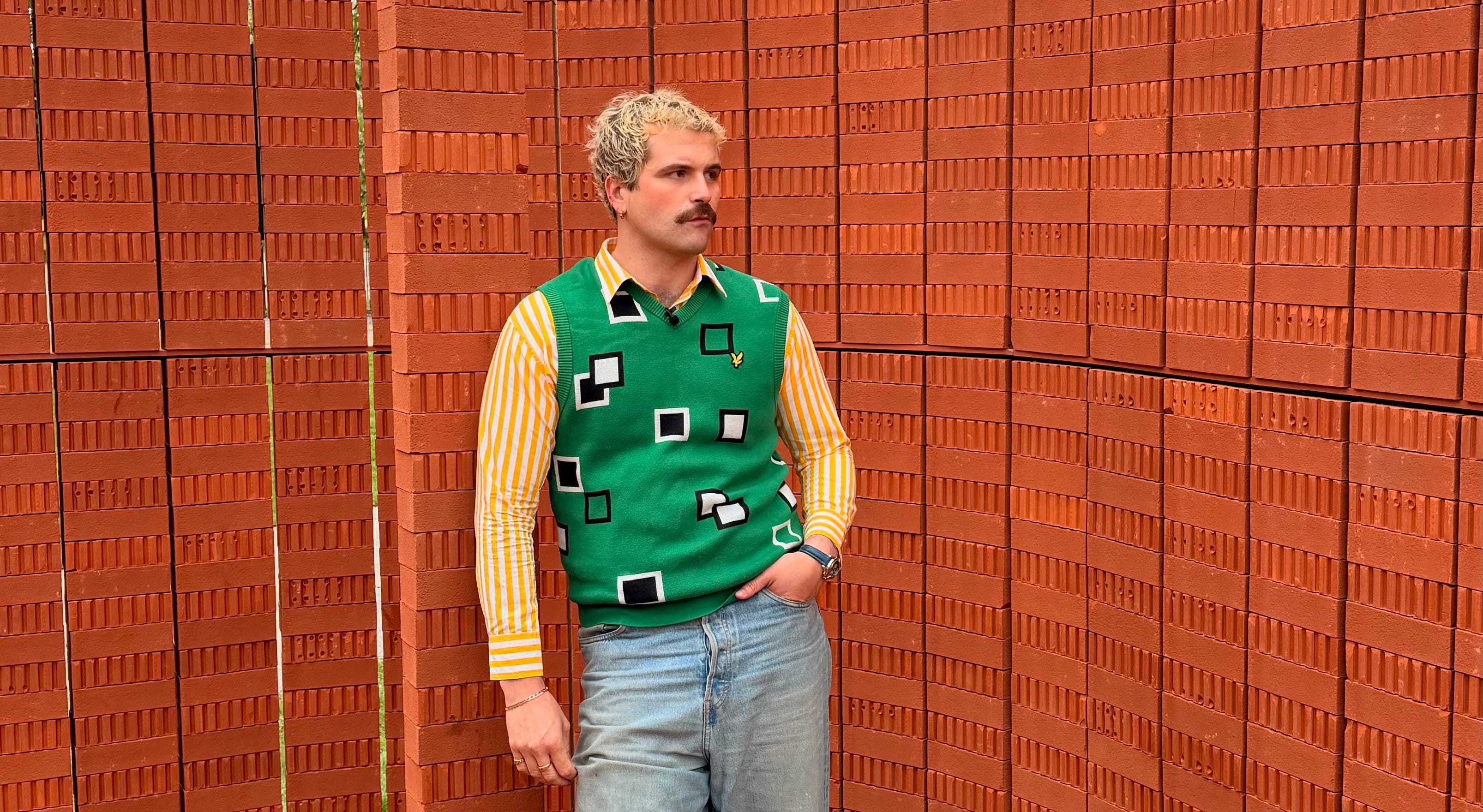
House of D’vey is for all the architect girlies who just haven’t realised it yet. Fifty percent lifestyle, fifty percent architecture, and absolutely none of it boring. Promise.
Follow: Instagram | TikTok | YouTube | Goodreads | Letterboxd
Thanks so much for reading honestly! Please let me know if you’ve got this far in the comments, and what you thought!
See you next week!!
Bisous
almost forgot about the mound lmao